Monday, October 20, 2008

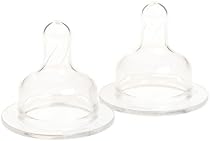
Born Free Stage 3 Nipples


Born Free Stage 3 Nipples- Twin Pack
From Born Free
Price: $6.99 & eligible for FREE Super Saver Shipping on orders over $25.
>>>Details

Availability: Usually ships in 24 hours
Ships from and sold by Amazon.com

9 new or used available from $2.03

Product Description

Twin-Pack Level 3 Fast Flow wide neck BornFree™ Nipples, recommended for babies of 6 months plus. It also operates as a Medium Flow nipple with some thicker types of formula.
>>>Details


Product Details

* Amazon Sales Rank: #96 in Baby Product
* Brand: Born Free
* Model: 20003
* Released on: 2006-11-01
* Dimensions: 1.30" h x 2.80" w x 6.60" l, .5 pounds

Features

* Contains two high grade silicone nipples per package
* Designed to simulate natural feeding
* Available in multiple flow rates to accommdate desired feeding level
>>>Details

...Read more!

Saturday, October 11, 2008

Breast Feeding In Public

Babies that are breast fed are very portable and
easy to comfort no matter where your schedule has
you going. Many women however, worry about
breast feeding in public. The worry of nursing
in a public place is normally worse than the
actual experience and often times the only people
who notice you feeding are the other mothers who
are doing the same thing.

Many women find ways to breast feed discreetly.
You can ask your partner or even a friend to
stand in front of you while you lift your shirt
from the waist. When you breast feed, the baby's
body will cover most of your upper body and you
can pull your shirt down to her face to cover
the tops of your breast. Some mothers prefer to
put a light blanket over their shoulders as a
type of cover.

When you are visiting someone else's home, you
may feel more comfortable either leaving the
room or turning away from people when you first
put the baby to your breast. If you would like
more privacy, breast feed in an empty room, car,
or public restroom.

A lot of restrooms are becoming more baby
friendly and they even have a seperate are with
a changing table and a chair. Several shopping
malls now offer special mother's rooms where
the mom can breast feed her baby in privacy,
which will help sensitive babies who are too
distracted by feeding to nurse well in public.
It won't take long at all though, before your
baby will learn to breast feed without any fuss
at all.

An alternative way is expressing or pumping
your milk at home and then offer it in a bottle
while in public. Keep in mind, offering
bottles with artificial nipples in the first
few weeks can and probably will interfere with
breast feeding.

When breast feeding in public, you should always
use what works best for you. During the first
few weeks, it will take some getting used to,
as it will be as new for you as it is for the
baby. With some time, you'll have no problems
at all.

If you don't feel comfortable breast feeding in
a certain location, then you shouldn't. You
should feel a certain level of comfort when you
feed, as the baby can tell when you aren't
comfortable doing something. If you show your
baby that you aren't nervous - you and your
baby will be just fine.

...Read more!

Tuesday, October 7, 2008

Breast Compression

The sole purpose of breast compression is to continue
the flow of milk to the baby once the baby no longer
drinks on his own. Compression will also stimulate
a let down reflex and often causes a natural let
down reflex to occur. This technique may also be
useful for the following:
1. Poor weight gain in the baby.
2. Colic in the breast fed baby.
3. Frequent feedings or long feedings.
4. Sore nipples for the mother.
5. Recurrent blocked ducts
6. Feeding the baby who falls asleep quick.

If everything is going well, breast compression may
not be necessary. When all is well, the mother should
allow the baby to finish feeding on the first side,
then if the baby wants more - offer the other side.

How to use breast compression
1. Hold the baby with one arm.
2. Hold the breast with the other arm, thumb
on one side of your breast, your finger on the other
far back from the nipple
3. Keep an eye out for the baby's drinking,
although there is no need to be obsessive about
catching every suck. The baby will get more milk when
drinking with an open pause type of suck.
4. When the baby is nibbling or no longer
drinking, compress the breast, not so hard that it
hurts though. With the breast compression, the baby
should begin drinking again.
5. Keep up the pressure until the baby no
longer drinks with the compression, then release the
pressure. If the baby doesn't stop sucking with the
release of compression, wait a bit before compressing
again.
6. The reason for releasing pressure is to
allow your hand to rest, and allow the milk to begin
flowing to the baby again. If the baby stops sucking
when you release the pressure, he'll start again
once he tastes milk.
7. When the baby starts to suck again, he
may drink. If not, simply compress again.
8. Continue feeding on the first side until
the baby no longer drinks with compression. You
should allow him time to stay on that side until he
starts drinking again, on his own.
9. If the baby is no longer drinking, allow
to come off the breast or take him off.
10. If the baby still wants more, offer the
other side and repeat the process as above.
11. Unless you have sore nipples, you may
want to switch sides like this several times.
12. Always work to improve the baby's latch.

...Read more!

Tuesday, September 30, 2008

Breast Feeding Adopted Babies

Not only is breast feeding an adopted baby easy, the chances are that you will produce a large amount of milk. It isn't complicated to do, although it is different than breast feeding a baby you have been pregnant with for 9 months.

Breast feeding and milk There are two objectives that are involved in breast feeding an adopted baby. The first is getting your baby to breast feed, and the other is producing enough breast milk.

There is more to breast feeding than just milk, which is why many mothers are happy to feed without expecting to produce milk in the way the baby needs. It's the closeness and the bond breast feeding provides that many mothers look for.

Taking the breast
Even though many feel the early introduction of bottles may interfere with breast feeding, the early introduction of artificial nipples can interfere a great deal. The sooner you can get the baby to the breast after birth, the better things will be.

Babies will however, require the flow from the breast in order to stay attached and continue to suck, especially if they are used to getting flow from a bottle or other method of feeding.

Producing breast milk
As soon as you have an adopted baby in sight, contact a lactation clinic and start getting your milk supply ready. Keep in mind, you may never produce a full milk supply for your baby, although it may happen. You should never feel discouraged by what you may be pumping before the baby, as a pump is never quite as good at extracting milk as a baby who is well latched and sucking.

...Read more!

Sunday, September 28, 2008

The First Six Weeks

Breast milk is the best food you can give to your baby. Breast milk is a complete food source, containing all the nutrients your baby need - at least 400 of them to be exact, including hormones and disease fighting compounds that aren't found in formula.

The nutritional makeup in breast milk will adjust to your baby's needs as he or she grows and develops. Aside from the brain building, infection fighting benefits of breast milk, which no formula can match, nursing will also help to build a special
bond between you and your baby. When nursing, your child thrives on the contact, cuddling, and holding - which you will as well.

Since breast feedings can take up to 40 minutes or more, you should pick a cozy spot for nursing. The atmosphere is very important, even more so in the
early days of breast feeding when you're still trying to get the hang of it. If you get easily distracted by noise, go somewhere quiet.

You should always hold your baby in a position that won't leave your arms or back sore. It works the best to support the back of your baby's head with your hand, although which position you choose depends on what's more comfortable to you.

When supporting your baby, a nursing pillow can sometimes be a big help. You should never feed until both you and your baby are comfortable. Pay attention to how your breasts feel when your baby latches on, as his mouth should cover most of the
areola below the nipple, and the nipple should be far back into your baby's mouth.

While some women adjust to breast feeding easily, other moms find it hard to learn. If you feel discouraged, always know that you aren't the only one. Everyone feels different when starting, it all depends on the mother and the situation.

Breast feeding will take practice. Therefore, you should give yourself as much time as you need to get it down to second nature. Always take it one feeding at a time. If you are having a bad day, tell yourself that it'll get better. Keep in mind
that any problems are temporary, as you'll be nursing like a pro by your six week postpartum checkup.

The first six weeks will be both an adventure and training. You can't expect to know everything when you begin, which is where training and practice will really help you excel. The more you breast feed, the more you'll learn. You'll also build a bond with your baby - which is something you'll always have for the rest of your lives.

...Read more!

Saturday, September 27, 2008

How To Use A Breast Pump

Just like breast feeding, pumping is a skill that you learn. When first trying a breast pump, most mothers are only able to express a few drops of milk. With the proper practice and knowledge, the mother will be more efficient at pumping.

Preparing the breast pump
1. Read all the instructions in the kit very carefully.
2. Every part of the breast pump will need to be sterilized before you begin using it.
3. After use, all the parts of the pump will need to be washed in warm, soapy water, then rinsed with hot water and drained on a clean towel. The plastic tubing doesn't need to be cleaned unless you get milk into it. If you do wash it, it should be hung to allow time to dry and drain thoroughly.
4. If your doctor feels the need, the entire kit can be sterilized every day.
5. When you first start with an electric pump, the suction level should be on the lowest possible setting.

Getting started
- Warm compresses, gentle massages of the breast and gentle nipple stimulation will help to stimulate a quick let down.
- You should always relax while doing breast massages during pumping. Some mothers prefer to close their eyes then think about nursing the baby, imagining the baby in their arms. The more relaxed a mother is, the better let down she'll
have and the more milk will be dispensed.
- Your first attempts at pumping should be considered practice sessions with learning to use the breast pump as the goal, not how much milk is actually dispensed.
- When you use a hand pump, quick, short pumps at the start is stimulating and will imitate more closely the way a baby breast feeds. Once the let down occurs and milk starts to flow freely, long, steadier strokes are more effective and less tiring.
- When you learn to pump, you should practice for 5 minutes on a side at least once or twice a day. Always pick the least stressful part of your day for pumping.

Relaxing and realizing that the pump is your friend is the single most important thing that a mother can do. There are several things that a mother can do to help herself relax, such as putting a picture of the baby on the pump, playing cards or a game with friends, watching television, read books, or talk on the phone. Simply watching the collection bottle is not helpful and will probably put more stress on you than you actually need.

...Read more!

Thursday, September 25, 2008

How To Choose A Breast Pump

The milk production in the breasts, much like so many other things, work on the shear principal of supply and demand. The more breast milk your baby consumes,
the more your body will need to make.

Breast pumps are generally used to insure continued production of breast milk when you cannot feed your baby - whether you are back to work, traveling, taking
medication, or just out of town.

Basic types of pumps Breast pumps can either be battery operated, hand operated, semi automatic electric, or even self cycling electric.

Hand pumps
Manual hand pumps are designed to use the strength of your hand or arm muscles for pumping one breast at a time. You can also get pumps that will use the leg
and foot muscles for pumping both breasts at one time. Mothers that with carpal tunnel syndrome may want to consider using a pump designed for the arm
or leg muscles or even an automatic model.

Battery operated pumps
Pumps with battery operation are the best for women who have an established supply of milk and want to pump once or even twice a day. These pumps use batteries to create suction, minimizing any type of muscle fatigue. Most battery type pumps are designed for pumping one breast at a time and are recommended for occasional usage.

Electric pumps
Even though electric pumps are more efficient than hand or even battery operated pumps, they also tend to be more expensive. You can however, rent them if you need to. Electric pumps can normally plug directly into an outlet and are designed for pumping both breasts at a time and even frequent use. Hospital grade pumps are the most efficient for initiating and maintaining milk supply, and are available for rent or purchase.

...Read more!

Sunday, September 14, 2008

Breast Feeding And Positioning

For some people, the process of breast feeding
seems to come natural, although there's a level
of skill required for successful feeding and a
correct technique to use. Incorrect positioning
is one of the biggest reasons for unsuccessful
feeding and it can even injure the nipple or
breast quite easily.

By stroking the baby's cheek with the nipple, the
baby will open its mouth towards the nipple, which
should then be pushed in so that the baby will
get a mouthful of nipple and areola. This
position is known as latching on. A lot of women
prefer to wear a nursing bra to allow easier access
to the breast than other normal bras.

The length of feeding time will vary. Regardless
of the duration of feeding time, it's important
for mothers to be comfortable. The following are
positions you can use:
1. Upright - The sitting position where
the back is straight.
2. Mobile - Mobile is where the mother
carries her baby in a sling or carrier while breast
feeding. Doing this allows the mother to breast
feed in the work of everyday life.
3. Lying down - This is good for night feeds
or for those who have had a caesarean section.
4. On her back - The mother is sitting
slightly upright, also a useful position for tandem
breast feeding.
5. On her side - The mother and baby both
lie on their sides.
6. Hands and knees - In this feeding position
the mother is on all fours with the baby underneath
her. Keep in mind, this position isn't normally
recommended.

Anytime you don't feel comfortable with a feeding
position, always stop and switch to a different
position. Each position is different, while some
mothers prefer one position, other's may like a
totally different position. All you need to do is
experiment and see which position is best for you.

...Read more!

Friday, September 12, 2008

Avoiding Foods While Breast Feeding

Many women find that they can eat whatever they may
like during breast feeding. Even though it's true
that some stongly favored foods can change the
taste of your milk, many babies seem to enjoy the
varieties of breast milk flavors. Occasionally,
your baby may get cranky at the breast after you
eat certain foods. If you notice this happening,
simply avoid that particular food.

The most common offenders duing breast feeding
include chocolate, spices, citrus fruits, garlic,
chili, lime, gassy vegetables, and fruits with
laxative type effects, such as prunes and cherries.

You can have a cup or two of coffee a day, although
too much caffeine can interfere with your baby's
sleep and even make him or her cranky. Keep in
mind, caffeine is found in many soda's, tea, and
even over the counter type medicine as well.

It's okay to have an alcoholic beverage every now
and the, although having more than one drink can
increase your blood alcohol level, putting the
alcohol into your breast milk.

If you are planning to have more than one drink
at a time, it's best to wait two hours or more
per drink before you resume any type of nursing
or breast feeding. There is no need to pump
and dump unless your breasts are full and its
time to feed your baby. While breast feeding,
any type of heavy drinking should be avoided.

Before you actually omit any foods from your
diet, you should talk to your doctor. If you
avoid certain foods and it causes a nutritional
imbalance, you may need to see a nutritionist
for advice on taking other foods or getting
nutritional supplements.

...Read more!

Monday, August 18, 2008

Health And Diet

The nutritional requirements for the baby will rely
soley on the breast milk, and therefore the mother will
need to maintain a healthy diet. If the baby is
large and grows fast, the fat stores gained by the
mother during pregnancy can be depleted quickly,
meaning that she may have trouble eating good enough
to maintain and develop sufficient amounts of milk.

This type of diet normally involves a high calorie,
high nutrition diet which follows on from that in
pregnancy. Even though mothers in famine conditions
can produce milk with nutritional content, a mother
that is malnourished may produce milk with lacking
levels of vitamins A, D, B6, and B12.

If they smoke, breast feeding mothers must use
extreme caution. More than 20 cigarettes a day has
been shown to reduce the milk supply and cause vomiting,
diarrhoea, rapid heart rate, and restlessness in
the infants. SIDS (Sudden Infant Death Syndrome) is
more common in babies that are exposed to smoke.

Heavy drinking is also known to harm the imfant, as
well as yourself. If you are breast feeding, you
should avoid alcohol or consume very small amounts at
a time.

The excessive consumption of alcohol by the mother can
result in irritability, sleeplessness, and increased
feeding in the infant. Moderate use, normally 1 - 2
cups a day normally produces no effect. Therefore,
mothers that are breast feeding are advised to avoid
caffeine or restrict intake of it.

By following a healthy diet and limiting your intake
of the above, you'll ensure that your baby gets the
right nutrients during your time of breast feeding.
This stage of life is very important - as you don't
want anything to happen to your baby.

...Read more!
Sunday, August 17, 2008

Benefits Of Breast Feeding

Once you've given birth, breast feeding is the single
most important thing you can do to protect your baby
and help to promote good health. Best of all, breast
feeding is free.

Along with saving you money on HMR (Human Milk
Replacement), breast feeding can also help you to
keep your medical bills down. Babies that are fed
with formula get sicker more often and more seriously
than babies that are breast fed They also have more
ear infections, respiratory infections, and other
problems.

This can be even more true if your family has had a
history of allergies. When a baby is breast fed, the
antibodies pass on from the mother to the baby,
helping to protect against illness and allergies. As
the baby's system matures, his body will begin to
make it's own antibodies, and he'll be more equipped
to handle sensitivities of food.

Sucking on the breast will also help with the
development or jaw alignment and the development of
the cheekbone. For this very reason, there is less
of the need for costly orthodontic work when the
child gets older.

Unlike formula, breast milk is always ready, always
available, convenient, and always the right temperature
for feeding. Plus, it contains all of the vitamins
and minerals your growing baby needs, saving you a
lot of money.

Breast feeding also offers many benefits for the mom
as well. The baby sucking at the breast will cause
contractions right after birth, leading to less
bleeding for the mom, and helping her uterus to it's
shape before pregnancy much faster.

Breast feeding will also burn calories, so a mom can
lose weight much faster than if she fed her baby with
a bottle. Breast feeding will also create a special
bond with the mother and the baby - which is one
thing formula simpy cannot do.

...Read more!

Getting Started With Breast Feeding

When you hold your baby for the first time in the
delivery room, you should put his lips to your
breast. Although your mature milk hasn't developed
yet, your breasts are still producing a substance
known as colostrum that helps to protect your baby
from infections.

If your baby has trouble finding or staying on
your nipple, you shouldn't panic. Breast feeding is
an art that will require a lot of patience and a
lot of practice. No one expects you to be an
expert when you first start, so you shouldn't
hesitate to ask for advice or have a nurse show you
what you need to do.

Once you start, keep in mind that nursing shouldn't
be painful. When your baby latches on, pay attention
to how your breasts feel. If the latching on
hurts, break the suction then try again.

You should nurse quite frequently, as the more
you nurse the more quickly your mature milk will
come in and the more milk you'll produce. Breast
feeding for 10 - 15 minutes per breast 8 - 10 times
every 24 hours is an ideal target. Crying is a
sign of hunger, which means you should actually
feed your baby before he starts crying.

During the first few days, you may have to wake
your baby to begin breast feeding, and he may end
up falling asleep during feeding. To ensure that
your baby is eating often enough, you should wake
him up if it has been four hours since the last
time he has been fed.

Getting comfortable
Feedings can take 40 minutes or longer, therefore
you'll want a cozy spot. You don't want to be
sitting somewhere where you will be bothered, as it
can make the process very hard.

...Read more!

Saturday, August 16, 2008

Reasons To Breast Feed

For many years, scientists have been playing out
the ingredients that make breast milk the perfect
food for babies. They've discovered to day over
200 close compounds to fight infection, help the
immune system mature, aid in digestion, and support
brain growth - nature made properties that science
simply cannot copy.

The important long term benefits of breast feeding
include reduced risk of asthma, allergies, obesity,
and some forms of childhood cancer. The more that
scientists continue to learn, the better breast
milk looks.

In addition to making your baby healthier, breast
feeding may also make him smarter. Many studies
have proved that breast fed babies tend to be
more smarter than babies who were fed with formula
or other methods. Breast feeding does help with
nutrients and the support of brain growth, which
is something every mother should think about.

The benefits for the nursing mom are just as
good as they are for the baby. The hormones that
are released during breast feeding will curb
blood loss post delivery and help to shrink the
uterus back to it's normal size.

Long term, the breast feeding mom will have a
lower risk for premenopausal breast cancer,
which is the kind that strikes before the age
of 50. The benefits will begin to show with
three to six months of breast feeding and increase
the longer that breast feeding continues.

By now, you should realize that breast milk is
one power packed liquid. It offers more for your
baby than formula, or any other scientific
creation for that matter. As you begin to plan
for the future of your baby, make a commitment
to breast feeding him for as long as you possibly
can - as it will do both your bodies good.

...Read more!